Car Park Line Marking
 Check if we cover your postcode
Professional Car Line Marking
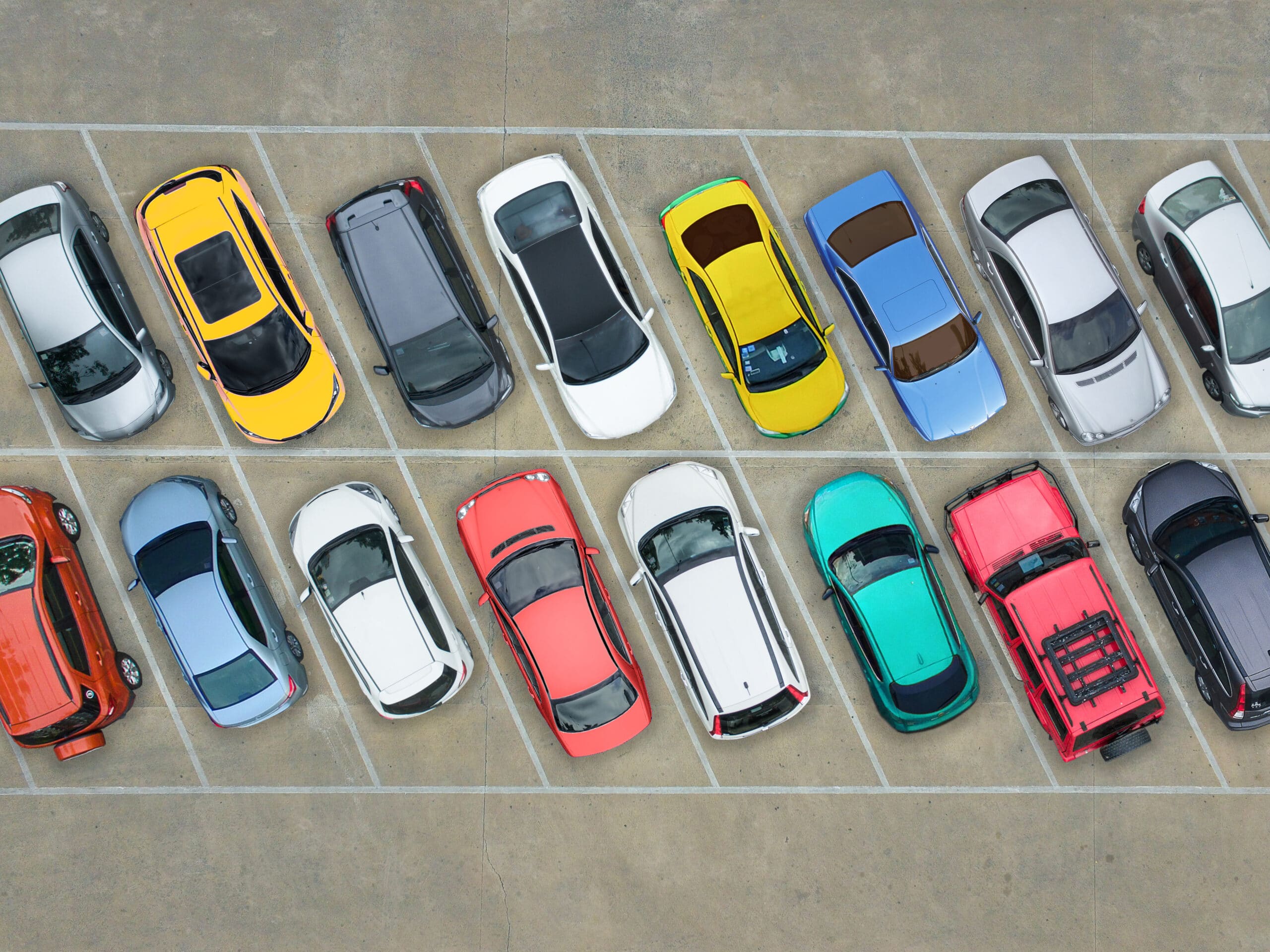
Car park line markings shape how a space functions the moment a vehicle enters the site. The layout influences traffic flow, parking behaviour, pedestrian safety and the efficiency with which the available space is used.
At Line Mark, we plan our car park line marking services to make sure the space operates as efficiently as possible. That means understanding how vehicles enter, where congestion forms, how pedestrians move through the areas and how the layout performs during busy periods. A well-designed car park should feel intuitive to use, with clearly defined bays, visible pedestrian routes and traffic flow that works naturally without confusion.
Whether you’re installing a completely new layout or updating an existing car park, Line Mark delivers structured marking systems designed around usability, during and operational performance.
For more information, speak to us to get your car park line marking project started.
Customised Car Park Line Marking For Multiple Sectors
No two sites use space in the same way, which is why our line marking for car parks is tailored to your unique operational needs and functions.
At Line Mark, every one of our layouts is built from the ground up. During our initial consultation, our team will assess how vehicles enter your car park, the routes they use, how they circulate and how they exit, alongside the pedestrian pathways. This allows us to create markings that support how the space is genuinely used once operational.
The difference shows up in how the layout performs once it’s installed, with traffic moving cleanly and remaining clear even when your car park is at its busiest.
Here’s how our parking lot line painting services are adapted for different environments:
Retail and Commercial Spaces
In retail environments, we plan car park line markings around the highest bay count that still preserves a smooth customer experience. More spaces only work when drivers can manoeuvre comfortably, doors can be opened safely and circulation remains clear during busy trading hours.
We design layouts with practical drive aisles, turning zones, directional flow and pedestrian crossings that help customers move through the site without frustrations or confusion.
Marking layouts typically include standard bays, accessible spaces, directional arrows and pedestrian crossings positioned near the entrance. We align the layout to ensure vehicles can move through the site easily, even during peak trading hours, while reducing congestion around high foot areas.
Parent and child bays, accessible parking spaces, and speed-control markings are commonly integrated into retail layouts, particularly as many drivers may be unfamiliar with one-way systems or busy retail parks. The markings themselves need to clearly communicate movement through obvious directional arrows, highly visible crossings and bays that are easy to identify without relying heavily on signage.
Our team uses durable materials, such as thermoplastic or MMA, depending on traffic levels, so markings remain visible even with constant vehicle turnover and exposure.
Warehouses and Industrial Sites
Our car park marking services are suitable for industrial sites and are designed around an operational hierarchy, separating cars, HGV manoeuvring, forklifts, loading activity and pedestrian movement into clearly controlled zones.
At many warehouse facilities, the discussion is less about parking and more about safely managing interactions among vehicles, loading operations and pedestrian movement. We create layouts that clearly separate car parking from loading bays, HGV routes and operational traffic areas to reduce conflict across the site.
Clearly designated pedestrian walkways and crossing points are integrated wherever additional protection is required. This helps improve visibility for both drivers and pedestrians in active industrial environments.
We typically use MMA resin systems within industrial environments because they perform well under constant traffic and repeated wear. Our layouts are designed to remain reliable during shift changes, delivery schedules and poor weather conditions, with markings positioned to support safe movement across busy operational areas.
Multi-Use Areas
For public and multi-use spaces, we design line markings that provide immediate visual guidance without forcing drivers to rely heavily on signage. Many users are unfamiliar with the site layout, particularly in one-way systems, so the markings themselves need to clearly communicate movement.
At Line Mark, we install clearly positioned bays, directional arrows, pedestrian crossing and circulation routes that make the layout intuitive from the moment a vehicle enters the site. We also incorporate accessible bays, parent-and-child spaces and clear speed-control markings where required.
The objective is to create a layout that naturally guides drivers, supports pedestrian safety and reduces misuse or congestion during busy periods.
Schools
In schools, our car park line painting layouts are designed around safeguarding, drop-off management and controlled pedestrian movement. We clearly mark bus bays, staff parking, pedestrian walkways and crossing zones to help manage congestion during peak arrival and collection periods.
Clear circulation routes and highly visible pedestrian marking help separate vehicles from pupils, parents and visitors, improving safety around entrances and shared access points.
Hospitals
Hospital layouts require clear separation between public parking, ambulance access, restricted zones and pedestrian movement. At Line Mark, we install standard bays alongside ambulance-only areas, accessible parking and emergency access markings using highly visible systems and colour differentiation where appropriate.
Accessible parking layouts are installed in line with BS 8300 guidance, helping ensure correct positioning, spacing and usability for patients and visitors.
Residential
At managed facilities and residential car parks, our car parking line markings focus on long-term usability.
We install clearly defined bays, numbered parking spaces and circulation routes to reduce misuse, visitor disputes and inconsistent parking behaviour. In many residential environments, numbered bays are essential because parking spaces are individually allocated or rented.
Where layouts require updating, we can remove and reline existing markings to support EV charging infrastructure, revised bay dimensions or modern parking arrangements without unnecessarily reducing overall capacity.
Our team will select the right materials to suit the surface and usage level, helping to keep markings consistent without frequent reapplication.
Car Park Marking Services That Define Bays and Routes
At Line Mark, we deliver car park marking services as a fully coordinated layout, with each element set out to control vehicle movement, define parking behaviour and maintain safe pedestrian access throughout the site.
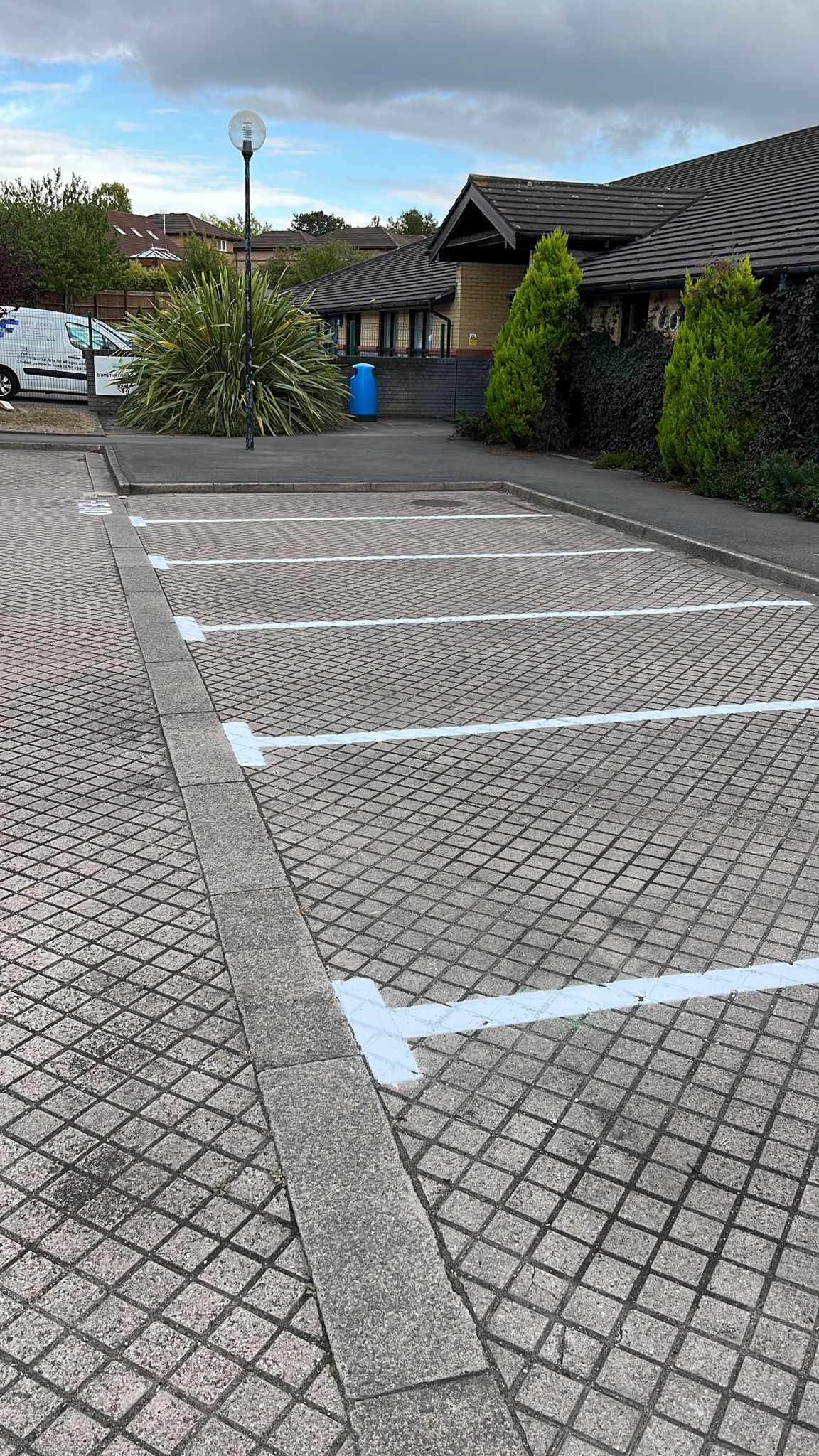
During your site survey, we assess bay dimensions, traffic circulation, pedestrian interaction and operational use before designing the layout. We then apply the markings using high-performance systems such as thermoplastic or MMA, depending on traffic levels and surface type, including tarmac, concrete and block paving.
Two common issues we regularly address are parking bay misuse and EV retrofitting. Oversized vehicles, visitor misuse and poorly positioned EV bays often create operational problems that require a full layout rethink and cannot be simply repainted on the existing lines. Which is why we provide full layout redesigns and bay reconfigurations tailored to the way the site actually operates.
Standard Parking Bays and Accessible Car Park Layouts
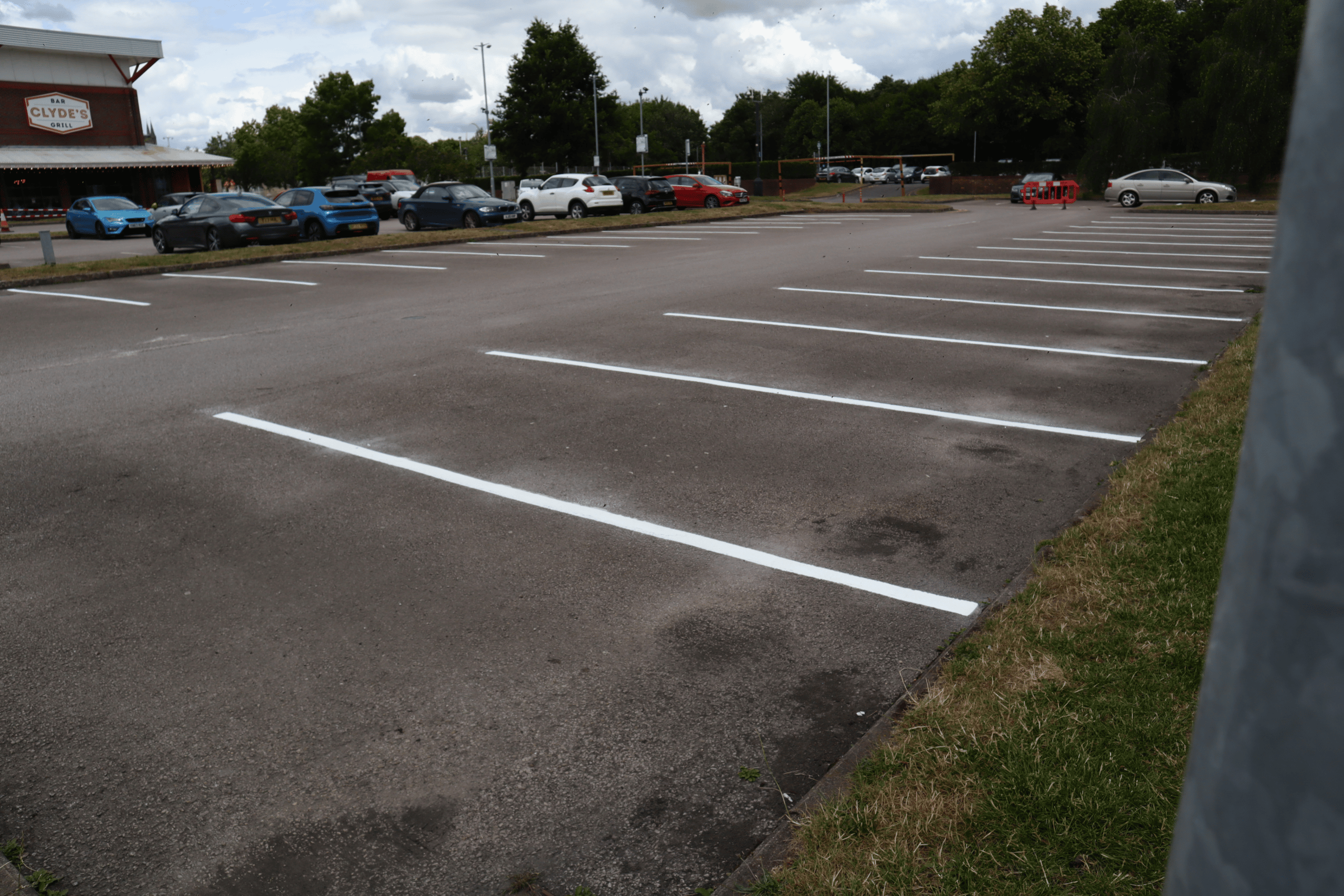
We set out standard bays with consistent dimensions and spacing to maximise capacity while maintaining clear drive aisles for vehicle movements.
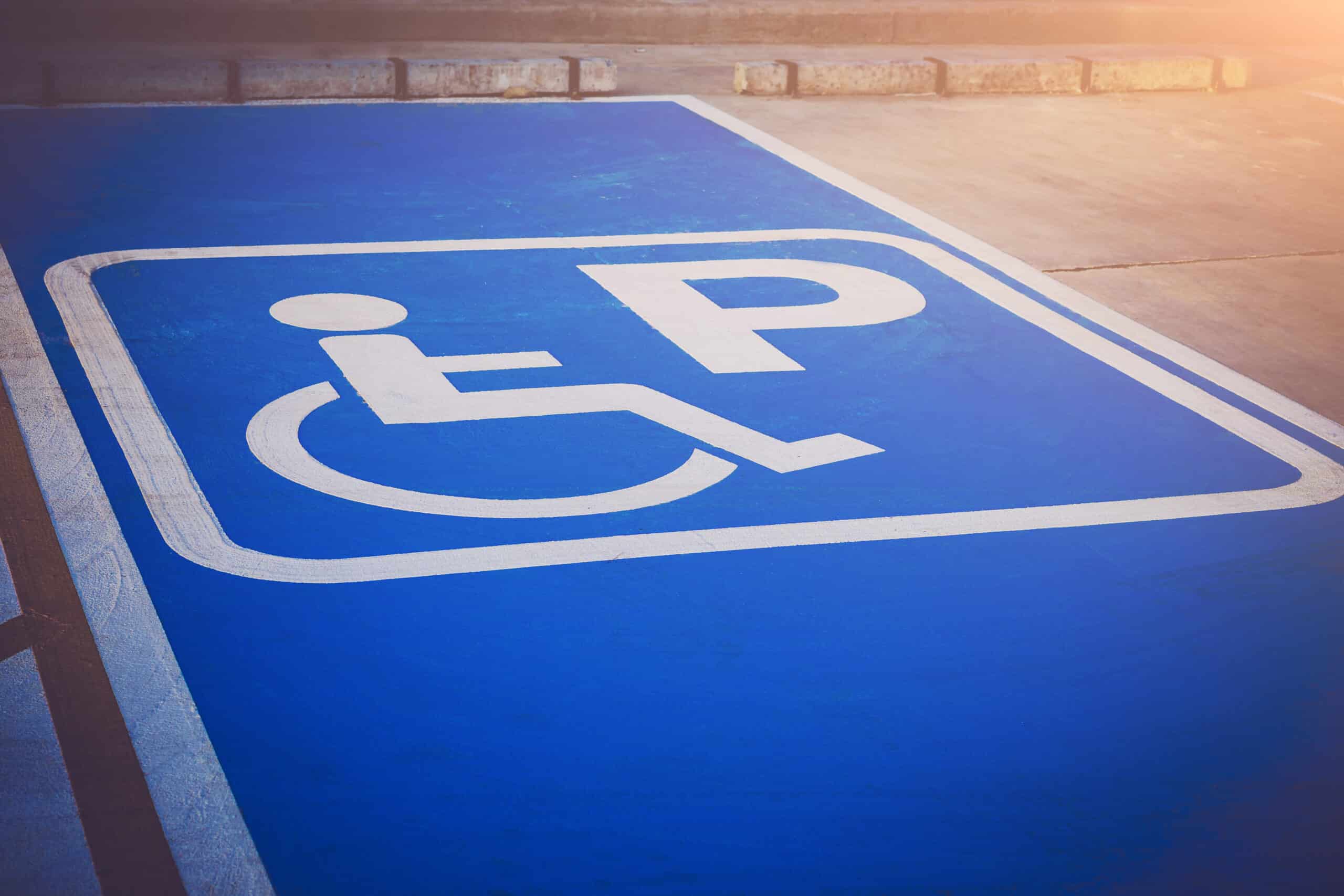
When we’re marking accessible bays, we’ll position them close to the entrance and install them in line with BS 8300 guidance, helping ensure correct sizing and access zones. We’ll also apply clear symbols and line markings to maintain visibility and support safe use.
EV Charging Bays and Coloured Surface Markings
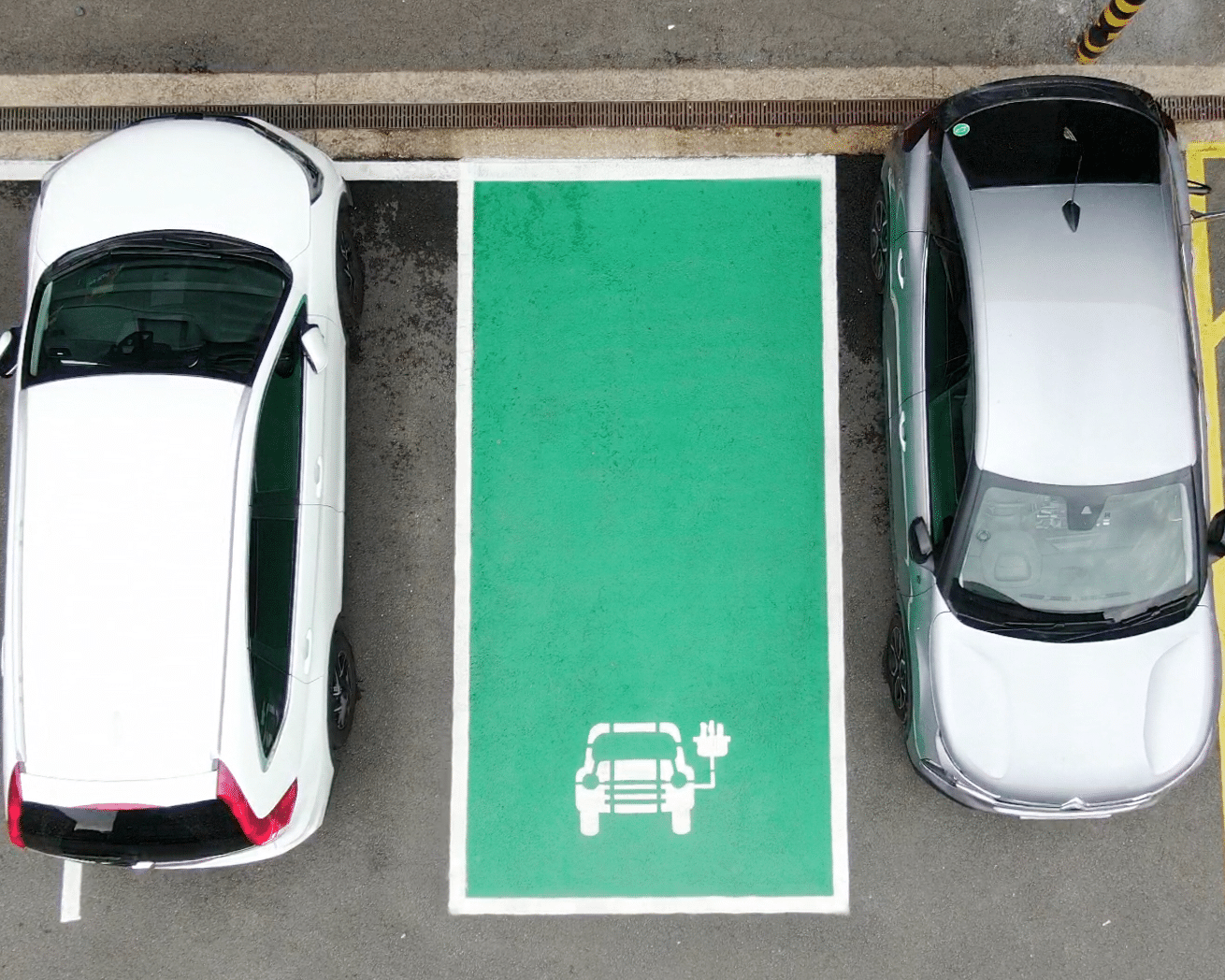
For EV charging, we’ll define EV bays using car park line painting combined with coloured surface coatings to clearly distinguish them from standard parking.
We’ll apply a durable coating designed to withstand vehicle traffic and environmental exposure, so markings remain visible over the long term. These bays are positioned within the layout to maintain traffic flow while clearly identifying designated charging areas.
Pedestrian Walkways and Crossing Markings
Our team will install pedestrian walkways and crossings to create defined routes across your car park and reduce the risk of interaction with vehicles.
We’ll position markings to connect entrances, parking rows, crossings and key access points. Well-designed pedestrian walkway lines help you maintain controlled movement between vehicles and pedestrians around your site.
Car Park Line Painting That Improves Safety and Space Utilisation
Car park line painting is used to control how space is used and how traffic moves through the property. At Line Mark, we design our layouts to increase parking capacity while maintaining clear circulation routes and pedestrian access.
Well-defined bays and routes prevent improper parking and improve vehicle positioning, which, in turn, increases usable space. Precisely marked walkways and crossings also reduce the risk of vehicle-pedestrian interactions, lowering the likelihood of collisions and site incidents.
To maintain visibility under daily use, Line Mark applies high-performance systems such as thermoplastic and MMA. We choose these materials based on traffic levels and they’re designed to maintain reflectivity and anti-slip performance over time.
Car Park Marking Contractors Focused on Compliance and Durability
Line Mark operates as a car park marking contractor, focusing on meeting recognised UK standards and delivering long-term performance. All our markings are applied in line with:
- BS EN 1436:2018 for visibility and performance
- BS 8300 for accessible parking layouts
- DfT (Department for Transport) Traffic Signs Manual (Chapter 5) for road markings guidance
The materials we select are suitable for your specific site conditions, meaning thermoplastic is used for longevity. In contrast, MMA resin is used in high-traffic environments where faster curing and higher wear resistance are required.
From an installation perspective, we carry out all necessary surface preparation, including cleaning, degreasing or short blasting, to ensure adhesion. We’ll follow up every job with final checks that assess line safety, uniformity, reflectivity and anti-slip performance.
Car Park Line Removal and Re-Lining Layouts for Existing Car Parks
At Line Mark, we provide full car park line removal and re-lining services for sites requiring layout changes, upgrades and operational redesign.
This may involve removing obsolete markings to increase capacity, introducing EV charging bays, widening parking spaces or updating layouts to meet current accessibility standards.
Line removal methods vary depending on the existing surface and marking system. Commonly used methods include mechanical grinding, burning and hydroblasting, although all removal methods create some degree of surface impact.
Once removal and preparation are complete, we apply the new layout using thermoplastic, epoxy or MMA systems, followed by a final quality check for consistency and visibility.
ArmourLine® Application System for Car Park Line Marking
We deliver car park line marking using the ArmourLine® application system, developed by Line Mark to certify top-quality, standardised installation and long-term performance.
The process begins with surface preparation, which may include cleaning, degreasing and/or captive shot blasting to create the correct surface profile for adhesion. This is followed by the application of high-performance materials, such as thermoplastics or MMA, selected based on traffic levels, surface types, weather conditions and site requirements.
We apply all markings with controlled line width, clean edges, precise spacing and specialised equipment, guaranteeing that the layout performs consistently under heavy vehicle use and routine wear.
SuperLine® Warranty and Maintenance for Car Park Marking Services
SuperLine® is Line Mark’s extended warranty and maintenance programme for our car park marking services, designed to maintain performance with time.
The programme covers the repair of damaged markings, protection against product failure and ongoing support in high-traffic areas. It involves conducting scheduled inspections to assess the condition of the layouts, along with maintenance, like cleaning, to remove tyre marks and surface build-up that can reduce visibility.
This allows layouts to remain clear and compliant without requiring full reapplication, supporting the long-term usability of your car park.
Our Car Park Line Marking Installation Process
All our car line markings on layouts follow a defined installation process for accuracy and durability.
Each project begins with a site visit, during which we’ll assess traffic flow, bay positioning, designated zones and pedestrian routes. We’ll then plan layouts to ensure the space functions properly once marked.
Next, we’ll carry out surface preparation to allow for proper adhesion, followed by the application of markings using thermoplastic or MMA systems, depending on your site’s needs.
We’ll close out the job by checking the finished layout for accuracy and compliance before handover.
Car Park Line Marking That Works Around Your Operations
Most of our work takes place on active sites that cannot fully close during installation. At Line Mark, we programme projects carefully to keep areas operational while layout works are completed.
Fast Cure Car Park Line Painting to Minimise Downtime
We use MMA systems for rapid reopening, allowing bays and traffic areas to return to service quickly after application. This is particularly useful for high-traffic sites that cannot afford extended downtime.
Phased Installation for Live Car Park Environments
For active sites, our team will complete work in sections to keep part of the car park operational at any time.
Priority Given to High Use Areas
We prioritise entrances, main circulation routes and high-traffic areas early within the programme so the site remains functional during ongoing works.
Why Choose Line Mark for Car Park Line Marking?
At Line Mark, we deliver car park line marking for layouts as a structured service, combining site assessments, layout planning, installation and ongoing maintenance into a single workflow. We design layouts to maximise parking capacity and improve overall traffic flow, with options to reconfigure existing car parks, through line removal and re-marking.
All our markings are applied using BS EN-approved materials, including thermoplastic for longevity and MMA for high-traffic environments. Every job we complete aligns with recognised standards, such as BS EN 1436:2018, BS 8300 and Department for Transport guidance.
We support projects with site surveys to measure and discuss requirements, quick quotes for speedy decision-making, our ArmourLine® system for advanced applications and our optional SuperLine® warranty and maintenance, which provides ongoing inspections, relining and upkeep as needed.
Standard Car Parking Space Dimensions
- Standard Parking Bays: 2.6m x 5m.
- Disabled Bays: Disabled parking spaces and other accessible bays, including parent-child parking spaces, range from 3.4m-3.8m wide.
- For more details, check out our guide on Parking Spaces & Dimensions.

Why Quality Car Park Marking Matters
Professional line marking improves safety, navigation, and appearance. It helps you:
- Maximise parking capacity
- Maintain accessibility for disabled users (as set out in BS 8300-1:2018)
- Provide clear pedestrian walkways and crossings
- Reduce collisions and liability risks
Our markings comply with relevant British Standards, including:
Department for Transport – Traffic Signs Manual Chapter 5 — Road markings guidance.
BS EN 1436:2018 — Road marking materials: performance for road users
BS 8300-1 & 2:2018 — Design of an accessible and inclusive built environment
We use high-performance, BS EN approved products:
- Thermoplastic line marking for longevity
- MMA (methyl methacrylate) resin markings for high-traffic car parks
- Anti-slip and reflective additives for improved traction and visibility
- Coloured surface coatings (e.g. EV bays, pedestrian zones, walkways)
- All installed by trained technicians to the latest safety standards
Your Line Marking Project
Our Process
- Initial consultation & site visit — We inspect the car park, assess surface condition, and discuss layout options.
- Proposal & quote — You’ll receive a clear, fixed quotation and layout plan.
- Preparation — We prepare the surface by cleaning, degreasing, or shot-blasting as required.
- Application — Line markings applied with thermoplastic, epoxy, or MMA systems.
- Quality check — We test line uniformity, reflectivity, and anti-slip finish.
- We can also reline existing car parks, remove obsolete markings, or expand layouts for EV charging or reconfiguration projects.
Maintenance & Re-Lining
Our maintenance programmes keep your car park looking sharp year-round.
We offer:
- Re-lining and remarking services
- Annual inspection and repainting
- Cleaning and sealing of surfaces
- Updating layouts to current accessibility standards
Get a Quote for Car Park Line Marking
Connect with us to get a detailed understanding or a quick quote.
Get a free site survey: We assess your car park layout and marking requirements before installation.
Receive a fixed quotation and layout plan: Clear pricing and a defined scope based on your site condition.
Schedule your installation: Please book a date for installation or re-markings based on your schedule and site availability.
Request your quote today: Submit your details online or contact the team to get started.
Gallery



FAQs
How much does car park line marking cost?
The cost of car park line marking depends on your site’s size and the scope of work, including re-lining or removal. Typically, projects start from approximately £895 + VAT following a site assessment and quotation.
How long does car park line painting last?
Thermoplastic markings typically last between 3-5 years, while MMA systems commonly achieve 3-7 years depending on traffic volume, surface conditions and preparation quality. Acrylic spray systems general have a shorter lifespan of around 1-3 years
Do your car park marking services meet UK standards?
Yes, our car park marking services comply with BS EN 1436:2018 and BS 8300 for performance and accessibility.
What surfaces can you apply car park line painting to?
We can apply car park line painting to concrete, tarmac and block paving. Our team will carry out thorough surface preparation in advance to ensure proper adhesion and performance.
Can you reconfigure an existing car park layout, including EV bays or revised bay sizes?
Yes, line removal and re-marking form a substantial part of our work, particularly for sites introducing EV charging, increasing parking capacity, or moving towards wider, modern bay dimensions..

12th Jan
Professional Staff
Professional Staff - clean and tidy - Good prices - Great job - this company...
Steve Wescott
20th Dec
Excellent Service
Line-mark were a very easy company to deal with. From the sales, admin all the...
L. Groves
10th Dec
Fantastic
Fantastic service from sales to the staff painting the lines. Thanks Neil HTS
MTS Mead Park
22nd Nov
Excellent Service
Excellent service from the initial site visit through to completion of our lines. Every member...
Barney
1st Oct
Great service from the original enquiry
Great service from the original enquiry through to the finished job! A friendly and helpful...
Mark Myles
26th Sep
Hevey Northampton and Blackstar yard line marking refurbishment.
I would like to thank Lee and Jarrod for their professional approach , work ethic...
Blackstar
26th Sep
The guys who arrived on site were…
The guys who arrived on site were excellent. Helpful, communicative and nothing was too much...
Calor Gas
18th Jul
A1 Service
great service, operatives were very professional, they integrated well with our warehouse staff so work...
KS
13th Jun
Great Team
Great team. Made the process very simple and easy. Extremely friendly and helpful. Will definitely...
Saj
13th Oct
speedy and professional
The re-lining of our car park and access road was carried out in a speedy...
Chris South
6th Oct
Very professional
Very professional service from start to implementation. The two teams that arrived on site were...
Louis Bertuzzo
15th Sep
Excellent
Excellent, quality product & service from quote, through to survey and installation
Stefan Tobolik
15th Sep
1st class job for Winkhaus
1st class job
Eddie Fitzpatrick
15th Sep
Excellent service from the very..
Excellent service from the very beginning. Came across a few issues during the work but...
Damian Stafford
15th Sep
Car parking bays and EV boxes
Very professional service from start to finish. Extremely happy with the results. Our car park...
Martin Griffiths
15th Sep
Excellent service, very professional from start to finish
Excellent service, very professional from start to finish
Jim – Marlec
15th Sep
Haas F1 Team line markings
I recently used Line-Mark to re-paint the lines for our front and rear car parks...
Simon Wood
15th Sep
Quick & Easy
70 vehicle spaces and a few other markings were completed in no time at all....
Nick Wyatt
15th Sep
Would recommend.
Great service from first contact to completion, would recommend.
Chris Dodman
15th Sep
5* Line Marking
We received a competitive quote for works following an online submission. The quote seems too...
Mehmet Hussein
Putting Lines all over the Country

Line Removal
Get a quote
 Check if we cover